Carbon
We’re committed to understanding and minimising the impact of our work to ensure a healthy world for generations to follow.
Our Sustainability Framework’s carbon category encompasses three key principles: Materials, Water and Energy. Each represents a critical opportunity to reduce emissions and add value to projects, from specifying low-carbon materials and implementing water-sensitive design to creating energy-efficient spaces powered by renewables.
The following details our carbon performance across our portfolio, and our practice.
REDUCING WASTE THROUGH ADAPTIVE REUSE
Repurposing an existing building has the potential to reduce carbon by 50% - 75% when compared to building from the ground up. If the construction industry prioritised a reuse-first mentality, the carbon savings could be enormous.
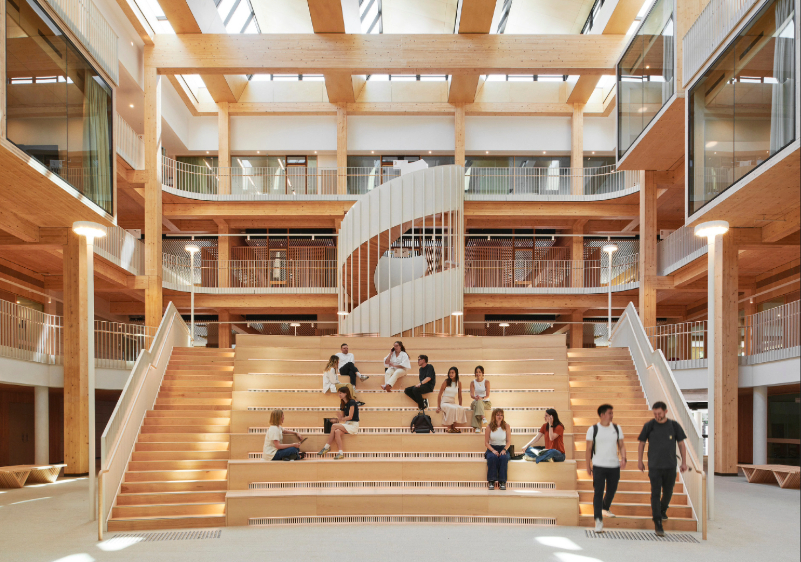
The Michael Kirby Building at Macquarie University in Sydney, Australia on Dharug Country is an adaptive reuse project that transformed a 1985 administration building. Hassell retained the existing concrete structure, added two timber-framed storeys, and converted an under-utilised courtyard into a naturally ventilated atrium, creating a flexible four-storey education space.
Putting circularity into practice
Hassell approaches design through a circular economy lens, creating systems where materials retain their value and waste is eliminated entirely. Given that 45% of global emissions stem from how we make and use things (including food), it’s clear that transitioning to a sustainable world requires far more than renewable energy alone.
Circular thinking moves beyond traditional sustainability. It redefines how we design, build and operate – shifting from a linear model to one that’s regenerative by design. By eliminating waste and pollution at the source, we reduce emissions across entire value chains. Keeping materials and products in use at their highest possible value preserves embodied energy and reduces the demand for virgin resources.
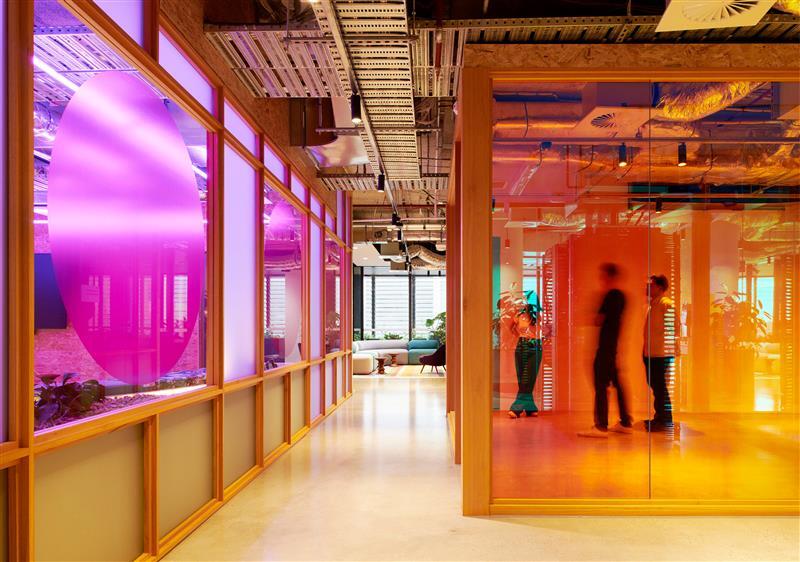
Around 90% of materials from the base build fit-out for the Australia Post workplace on Wurundjeri Country in Melbourne, Australia (pictured below) were reused or recycled, showcasing lean and efficient design.
DESIGNING FOR DISASSEMBLY
Good design must carefully consider and plan for what happens when a building reaches the end of its life. This approach ensures that materials retain their value and become part of circular systems rather than resulting in waste and excessive emissions.
Design for deconstruction challenges conventional design by planning for a building’s end-of-life from the start. At its core, this means we design for reversible systems: selecting bolts and screws over chemical and welded bonds; ensuring materials and connections are documented for easy and quick removal at end-of-life; and separating systems into non-structural elements to allow for repairs, upgrades and changes.
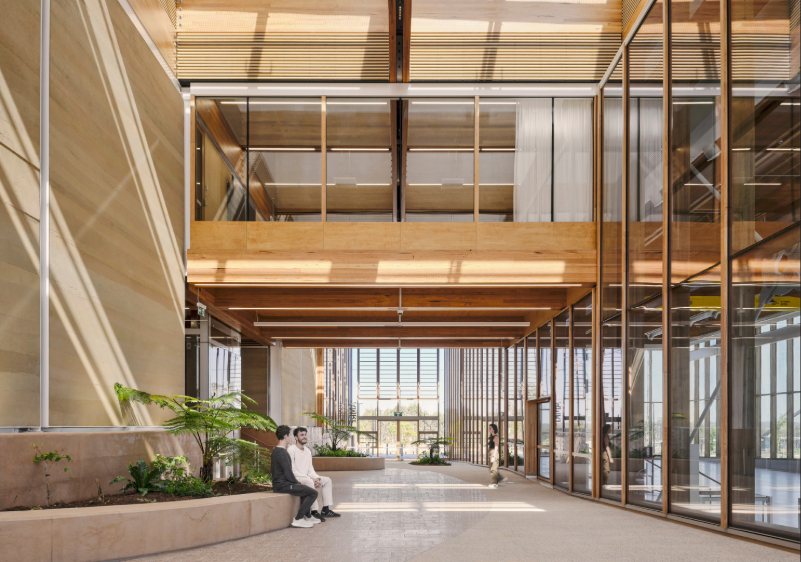
The First Building in Bradfield City Centre on Dharug Country, Western Sydney, Australia, pictured below, is designed for maximum reusability at the end of its life.
CARBON REDUCTION IN OUR PRACTICE
We’ve been taking steps to measure and reduce the carbon impact of our operations and supply chain since 2007. This includes the following initiatives:
- Energy: We’ve been measuring the greenhouse gas emissions from our operations and supply chain since 2007, giving us insight into where we have an impact and where we can take action.
- Business travel: Our climate strategy includes a focus on reducing transport emissions, including policy guidelines to reduce our extent of corporate travel emissions.
- Water: We continue to take steps to reduce our water usage, including maintenance and use of water-efficient appliances and fittings.
- Waste: For FY25, we received our first full 12 months of waste data, which has been used to estimate waste generation across our studios globally and where we can take action to reduce it. For waste in our supply chain, we have embedded consideration of supplier environmental practices, including waste management, within our Sustainable Procurement Strategy.
For full details on our carbon performance download the full Designing for Impact report here.

Scan this QR code with your phone to follow Hassell on WeChat.