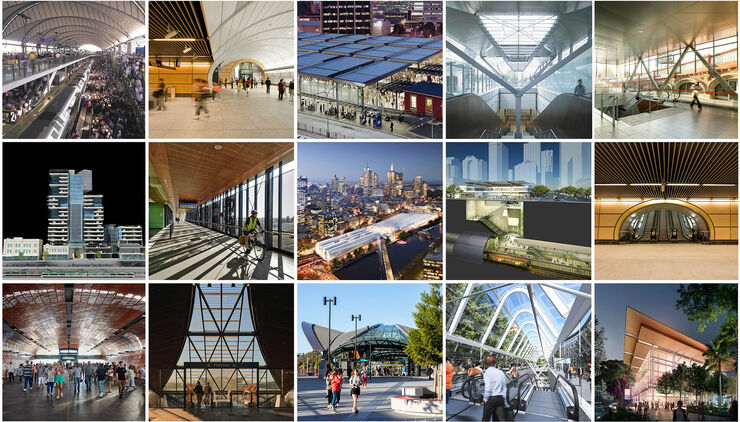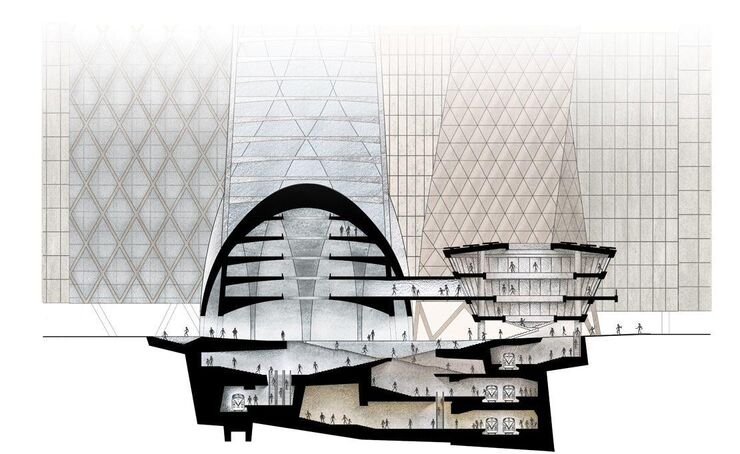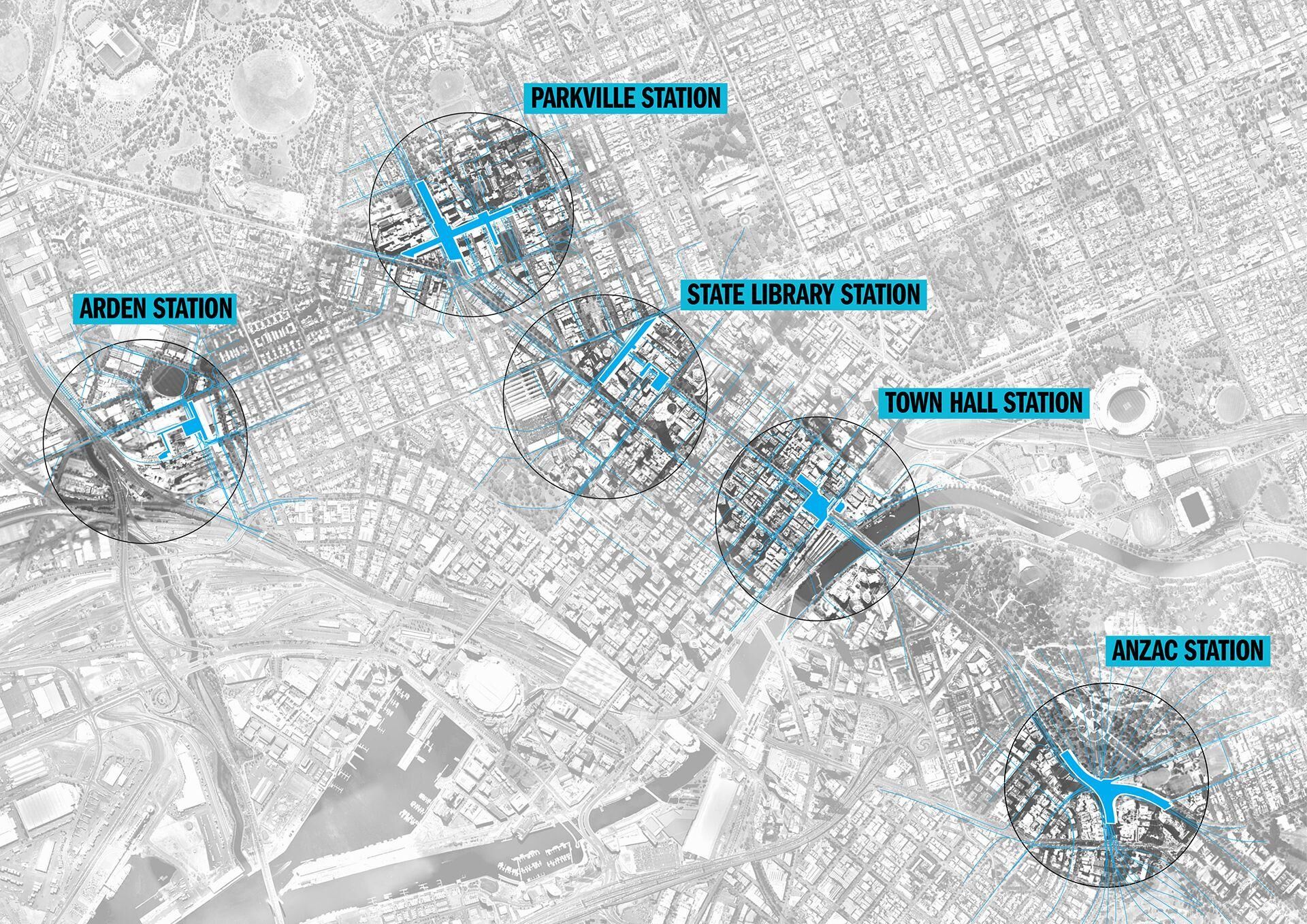
Designed to integrate with surrounding parklands, Anzac Station is a ‘pavilion in the park’ that provides a seamless connection above and beneath the Domain precinct linking Melbourne’s city centre and busy St Kilda Road with the Domain train and tram interchange, the Shrine of Remembrance, and the Royal Botanic Gardens parklands.
We challenged the brief in two ways, which expanded the opportunity for Anzac to become more than a Metro station. In a first for Melbourne (and possibly Australia), our design-led approach to the station places the ‘main’ entry on the tram platform and introduces underpasses to the Metro concourse from each side of St Kilda road for safe and seamless commuter transit between tram and train, and into the precinct.
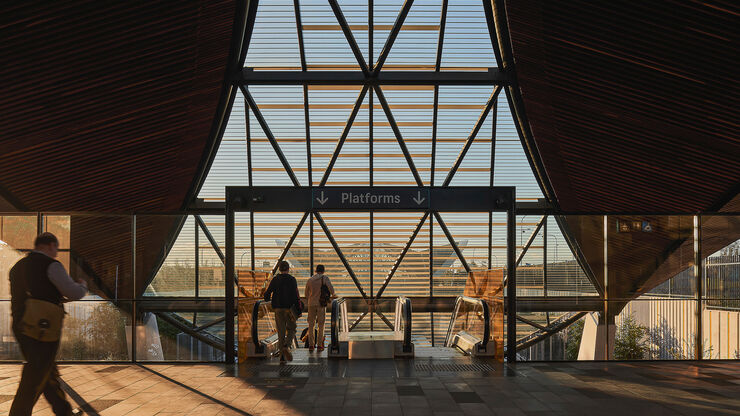
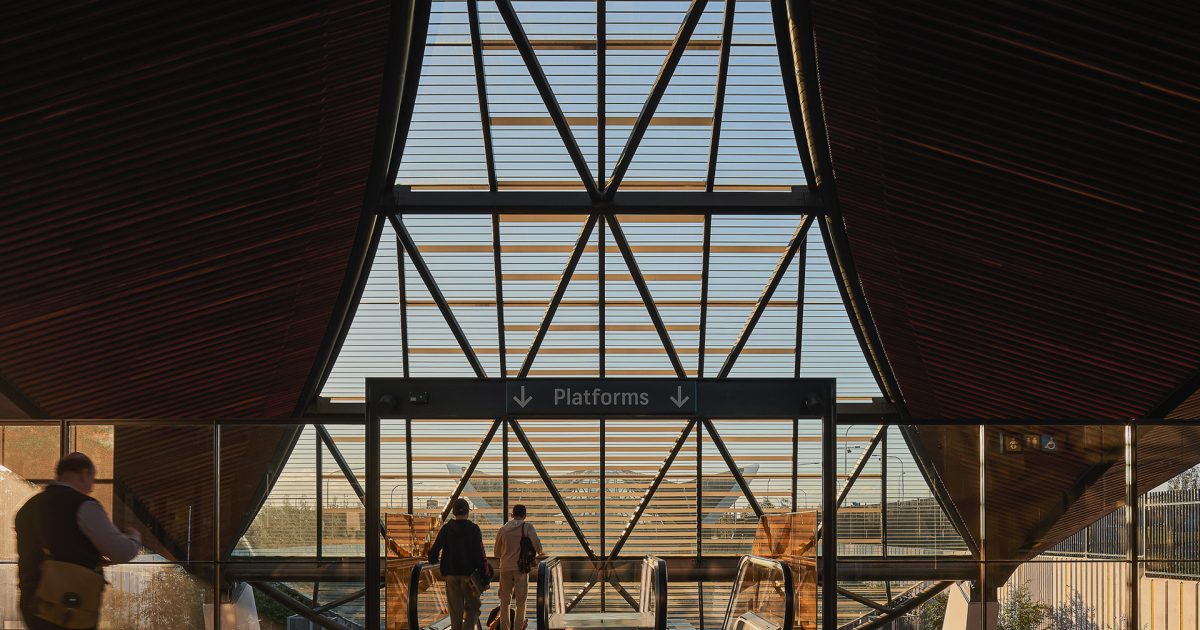
A light-touch floating timber canopy with geometries that echo those of the Shrine of Remembrance is the distinctive above-ground architectural feature of Anzac station. Large voids and lightwells pull daylight deep into the concourses, improving the transit experience and reducing power usage.
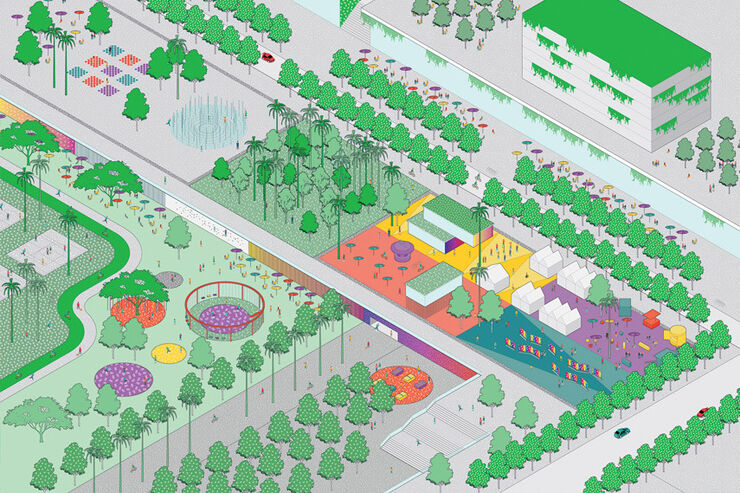
Secondly, we increased the scope of landscaped parkland in Albert Road Reserve, rationalising roads and carparks in the process, for a greener urban nexus. Our approach proposed more than was asked in the brief, increasing Anzac Station’s footprint to integrate the station and tramstop, and link into the parklands of the Shrine to Albert Park Lake.
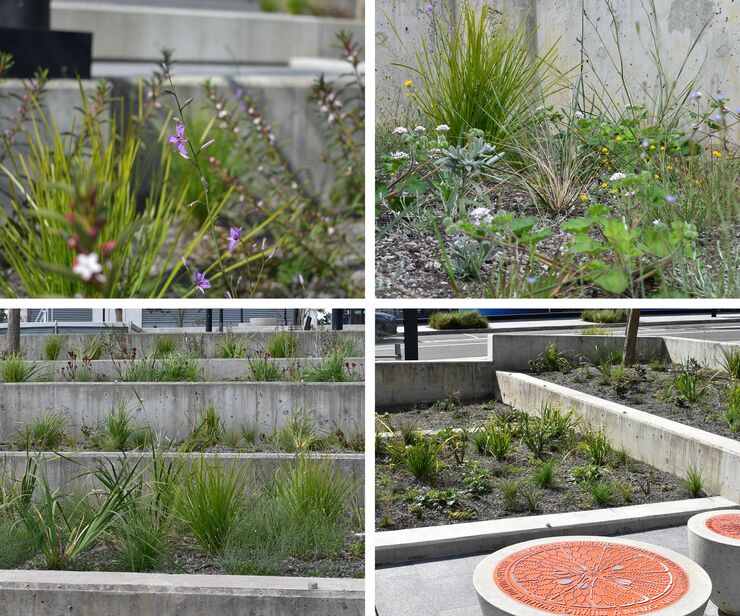
Domain is a rapidly evolving commercial and residential hub of increasing density that requires an improved urban ecology. Increasing the scope of the project to encompass the Domain and Albert Road precinct means this station and its surrounds provide a better environment on the city fringe. Roads and carparks are transformed into a ‘green spine’ that delivers a verdant Shrine to Bay link. The integration of visible water-sensitive urban design initiatives assists with water management, biodiversity, and habitat creation at this busy junction.
In a win for city residents and visitors, open public spaces extend from the station through the new Albert Road Reserve toward Albert Park Lake. In addition to offering a new pedestrian-friendly plaza and park for those who work and live nearby, this design-led above-station urban greening initiative provides a cooling tree canopy and fosters biodiversity in what has long been a heat-charged and windswept intersection. It also contributes to the bigger picture $13million ‘Shrine to Sea’ initiative that carves a boulevard connecting the Domain Gardens to Port Phillip Bay.

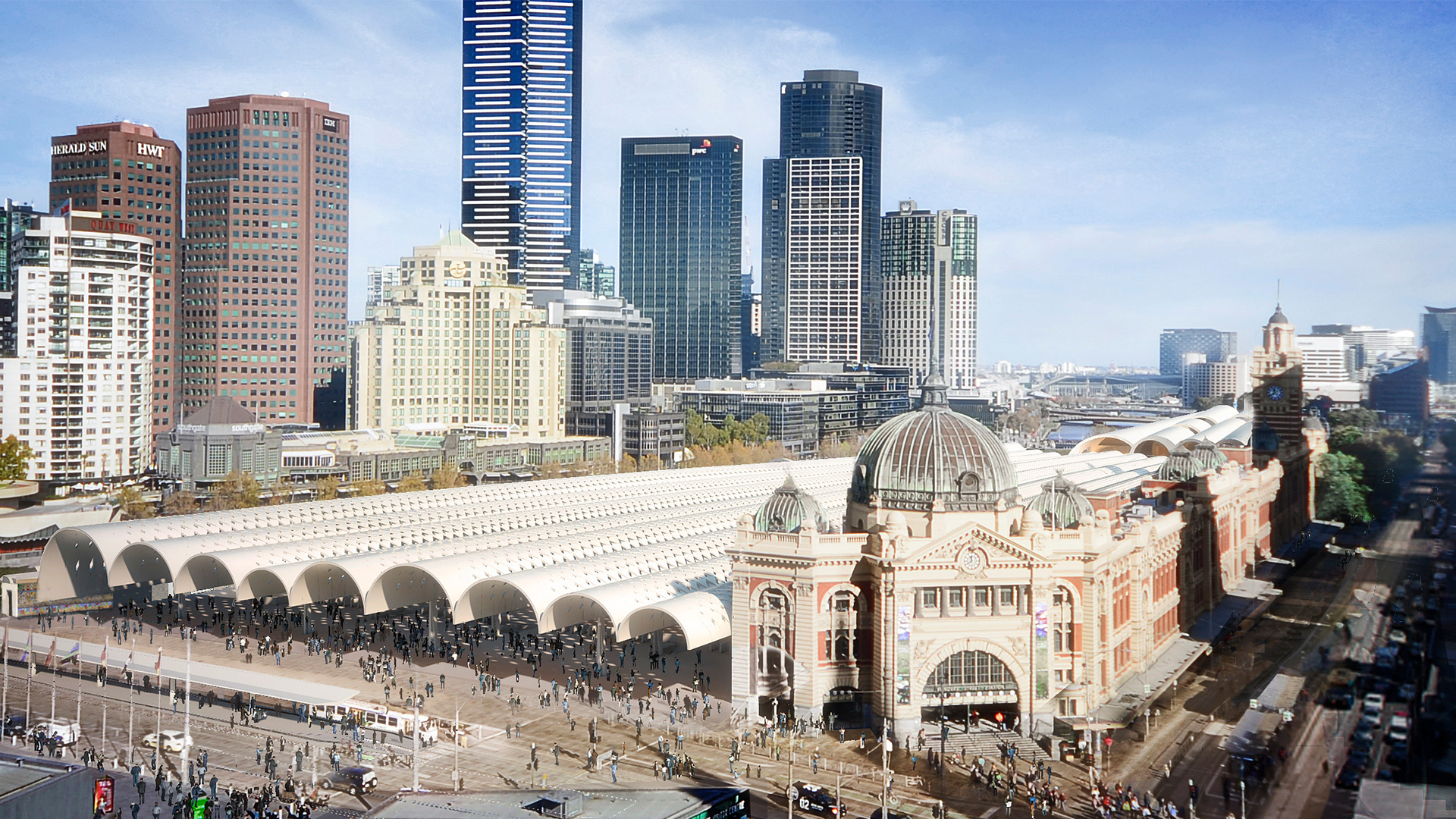
Prominently placed at the southern Swanston Street entrance to the CBD, opposite Flinders Street Station, the new Town Hall metro station reorients Melbourne’s city centre, with entrances at City Square, next to the heritage-listed Young & Jackson hotel, and at Federation Square.
The City Square entrance respects its historic neighbours – St Paul’s Cathedral, Melbourne Town Hall, and the Manchester Unity building – with a nod to modern and contemporary city buildings. The entrance pavilion and the redesigned City Square provide a vibrant place for people to meet in the city. City Square itself is revitalised and upgraded in terms of amenity to reassert its role as one of the prime public gathering and events spaces in the heart of the city. Native trees and planting embrace the square, creating an urban oasis amidst the bustling city streets.
The Federation Square entry has been developed in consultation with stakeholders and forms a key part of the Metro’s simple ‘portal style’ design language, while creating a feature building that replaces the former Visitor Centre. Inside, vaulted ceilings soar 10 metres high over 19-metre-wide platforms, making this a landmark of Grand Central scale and stature for Melbourne.
As part of the build, a world-first trial is underway to capture geothermal energy in the foundations of the Metro Tunnel’s new State Library Station, one that could start a revolution in clean energy.
The new State Library Station connects the northern end of Swanston Street to the CBD, with entrances on La Trobe Street (at the corner of Swanston Street) and Franklin Street. Passengers can slipstream into the bustle of the city, amble onto campus at RMIT, or retreat into laneways awash with secret histories and treasure troves of culture.
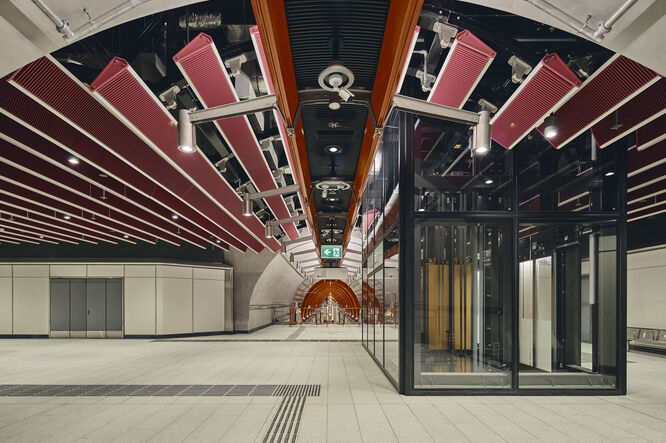
Underground, the station is remarkable for its wide aisles and sweeping arches that recall the monumental State Library of Victoria above. At street level, the station’s Latrobe Street entrance echoes the gravitas of the library with a large, concrete-framed portal. The extension of Literature Lane connects La Trobe and Little La Trobe streets, where new cafes and shops flourish.
Reconfiguring the road space above State Library Station has created 3,500 sqm of new public space laden with 50% more mature trees across the precinct. Eclectic, energetic promenades and laneways transform the area, opening up the city’s north where new and immersive shared zones improve the neighbourhood for pedestrians, cyclists and the growing local community.
Along Franklin Street, a modest portal entrance provides convenient access into RMIT for students, and boulevard-style planting has established a native, bio-diverse tree-lined promenade to encourage walking between the station and Queen Victoria Market, and into the northern end of the CBD. A’Beckett Street has been transformed into an uptown pedestrian- and cycle-friendly plaza for community activities.
“Water sensitive urban design principles have also been integrated into the design of the State Library Station precinct to lessen flood risk in low-lying areas, reduce stormwater runoff and provide passive irrigation to plants, thereby reducing demand for potable water. Areas that receive high stormwater runoff are landscaped to cope with heavy rainfall, and new tree pits contain large soil volumes to provide passive irrigation.” – Victoria’s Big Build
For the first time ever, Parkville’s world-class education, research and healthcare hub is connected into Melbourne’s train network. Parkville Station is a much-needed metro transit node for the many thousands of students, patients, workers and other travellers who visit the precinct every day. Passengers from as far away as Sunbury, Cranbourne and Pakenham – and stations in between – are now able to get to Parkville without changing trains.
Parkville Station’s glass feature roof allows abundant natural light to enter the station concourse, and the landscape seamlessly connects the tree-lined view of Grattan Street. Visitors and residents will benefit from the precinct’s abundant public spaces for encounters, learning, and healing.
The Metro station underpass provides a safe and accessible connection to the doorsteps of the University of Melbourne, Royal Melbourne Hospital, the Victorian Comprehensive Cancer Centre, as well as some of Australia’s leading medical and healthcare facilities. These institutions are also better connected at street level with Grattan Street, which is reimagined as a more pedestrian-friendly boulevard.
Now a grand promenade and biodiversity corridor to complement the city’s flourishing health and education quarter — Parkville is a place of exploration and ideas. Generous streetscape design connects the Metro with the many tram, bus, cycling, and walking routes, serving as a gateway to the University of Melbourne and hospitals.

Breathing new vigour into North Melbourne, Arden Station is a sustainable transport hub within walking distance of the North Melbourne Recreation Centre, Arden Street Oval and the Route 57 tram. Its bold, red brick archway reflects the area’s industrial heritage while creating a distinguished landmark for the new Arden precinct. The new station is part of a significant urban renewal project, creating a vibrant residential, commercial, and retail precinct on the city fringe.
In fact, Arden Station is destined to be the centrepiece of Victoria’s new knowledge and innovation precinct, which is expected to generate up to 34,000 jobs and be home to around 15,000 residents by 2050.
Pursuing best practice sustainability factors includes delivering daylight deep into the underground platforms via three enormous skylights nestled within the public realm. Our material selection specifies locally-sourced, low VOC options along with water-efficient fixtures and fittings, which together drive the sustainability performance and outcomes for the project.
Around the station, the public realm is activated by a sequence of welcoming plazas, landscaped terraces, and tree-lined streets with materials that reference the local industrial character. Our landscape approach is an ‘urban sponge’ that incorporates sunken gardens and native plants that tolerate water inundation, which will work with the site’s natural flood systems.
Ongoing community and stakeholder feedback has resulted in station precinct design updates, outlined in an amended Development Plan, that include:
- retaining 15 more trees, bringing tree savings to 47 more than in the station’s Environment Effects Statement
- creating a new series of public grassed areas interspersed with tree planting
- improved station access with repositioned entry gates and the reorientation of entry ramps on Laurens Street
- a separated, raised bike path on the west side of Laurens Street and wide pedestrian paths
- widening of Station Lane to make more space for vehicles, drop-off zones and taxi bays, and more than 120 bike parking spaces
- improvements to materials and finishes for the station services building