Place
We believe the world’s best places work in harmony with their surroundings, enhancing and regenerating place, rather than depleting local environmental systems.
Our Sustainability Framework’s ‘Place’ category comprises three interconnected principles: Site, Ecosystem and Transport. These guide our approach to leveraging existing assets, protecting and enhancing natural systems, and promoting sustainable modes of transport that reduce carbon emissions while improving accessibility.
This report assesses our place-based design outcomes, examining how our projects respond to their unique contexts and contribute to ecological regeneration.
DESIGNING FOR FLOURISHING PLACES
Our designs prioritise biodiverse environments that connect people with nature, integrating strategies that enhance ecological value while supporting human wellbeing and climate resilience.
Biodiversity loss represents one of the most pressing environmental challenges, requiring thoughtful intervention in the built environment. This is most pressing in our cities, where urban green spaces must be created and cared for in ways that allow them to restore the surrounding ecosystems.
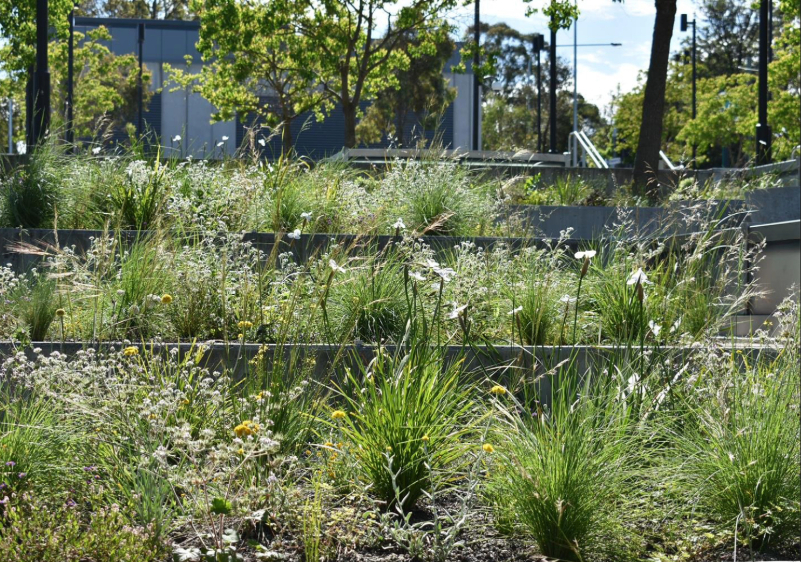
This Sydney Metro planting trial is testing 8,000 plants across 110 species to identify the most successful combinations for enhancing biodiversity in future urban public landscapes.
During FY24, we worked with the Government Architect NSW to develop the Biodiversity in Place Framework, a practical guide to bring nature back into our cities, towns and suburbs. While this framework is of direct benefit to ecosystems and communities in NSW, it serves a broader purpose for other regions both in Australia and overseas.
The framework outlines how communities, policymakers and industry can assist in reshaping nature-positive urban environments to reconnect people with larger natural systems. Through the introduction of six key principles, Biodiversity in Place advocates for nature-positive approaches to the urban environment through ecology-rich planting to verges, backyards, balconies, public spaces, rooftops and critical infrastructure such as roads, railways and creek corridors.
Explore the Biodiversity in Place framework here.
CONNECTING COMMUNITIES
We are committed to designing for a zero-carbon future, prioritising regenerative practices that actively promote sustainable modes of transport. Our approach focuses not only on reducing reliance on fossil fuel-dependent vehicles, but also on bringing communities together via interconnected, mixed-use neighbourhoods and public spaces that prioritise walkability and cycling.
Our work in the urban transport sector is core to delivering our purpose. While comprising only 8% of our projects globally in FY25, we spent over a quarter of our time on transport projects during this period, evidence of our commitment to this important sector.
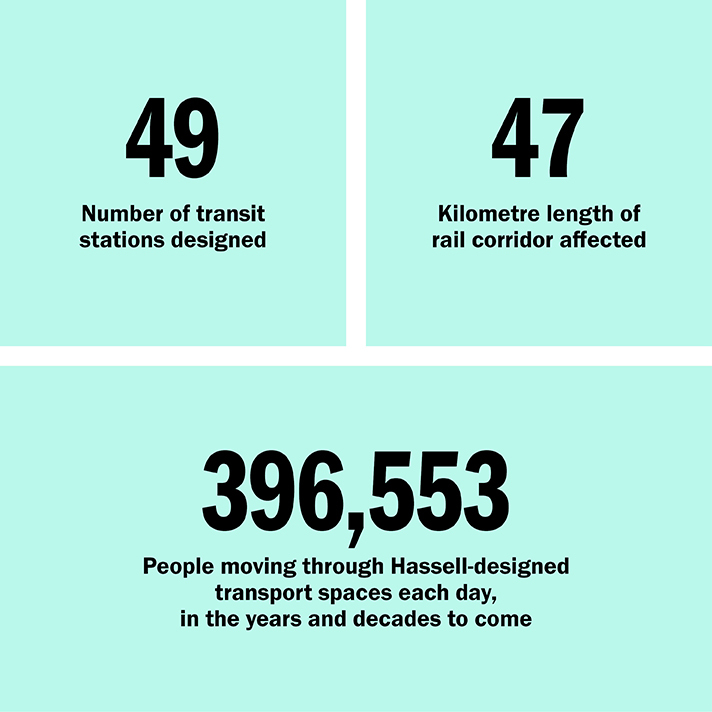
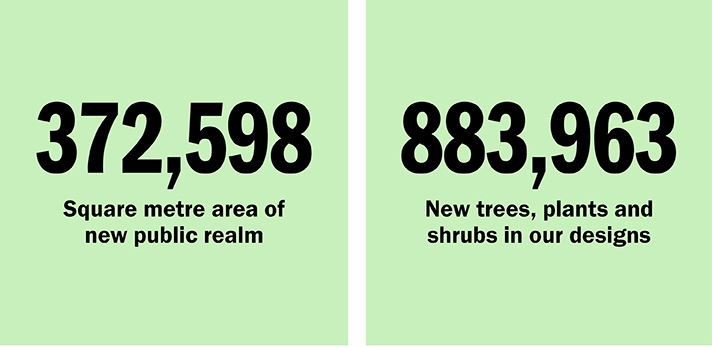
With urgent environmental concerns and changing community needs, it’s now more important than ever to design places that prioritise walking and easy access to convenient mass transit options. Our urban transport projects build connections, improve lives, and bring together communities in our increasingly divided cities. The real challenge for modern cities is to create places that are not just sustainable, but promote equality, prosperity and social mobility.
For insight into how we create real impact for communities, download the full Designing for Impact report here.
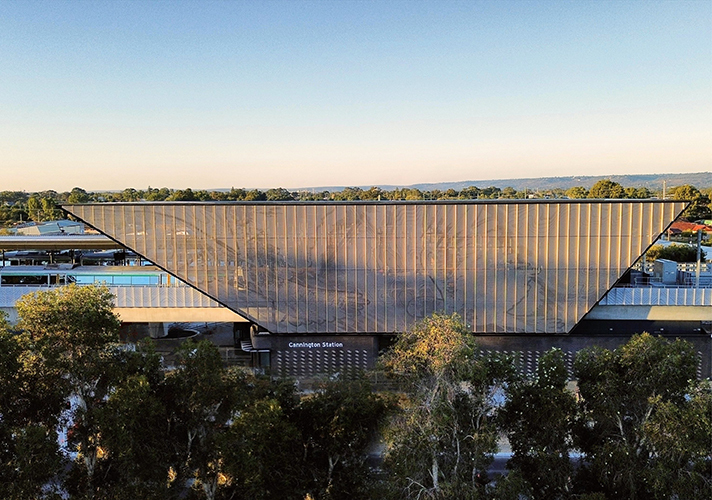
The Armadale Line Upgrade Alliance (ALUA) elevates a 7km stretch of rail in Perth’s southern suburbs on Whadjuk Nyoongar Country, reconnecting communities and creating five new stations within a vibrant parkland.
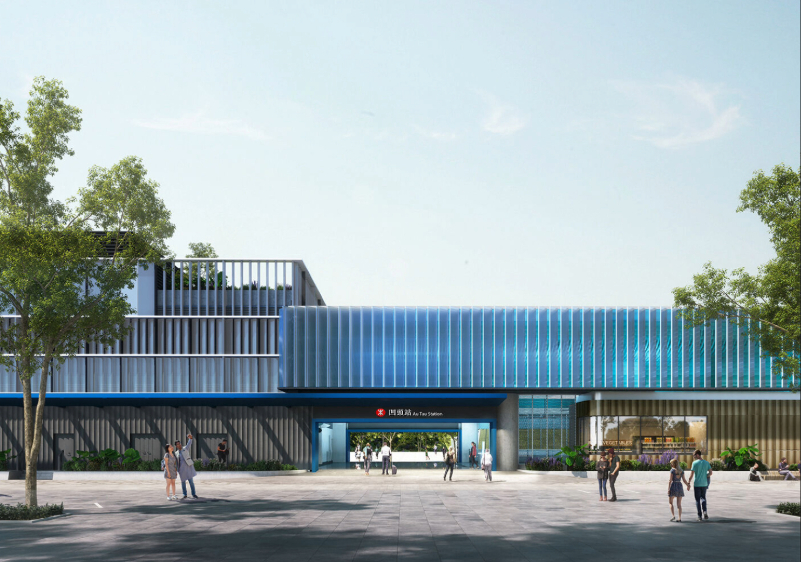
The MTR Northern Link in Hong Kong, aims to bring the community together by using transport design to create thriving urban hubs and public spaces, and enhance the lives of residents.
IN OUR PRACTICE
In our day-to-day operations, we continuously reduce our impact on the surrounding environment. We consider our proximity to Key Biodiversity Areas (KBAs), ensuring our studios and our people are near public transport options, and regularly purchase Greenfleet reforestation and revegetation offsets to preserve natural ecosystems in Australia. We extend our approach to our supply chain via our recently introduced Sustainable Procurement Policy.
For insight into how we create real impact for communities, download the full Designing for Impact report here.